The Winning Creative Doesn't Come from Creativity
The best ad isn't designed by the creative director, it's picked by the algorithm. Learning to read that signal — and act fast — is the most valuable skill of the modern media buyer.

Five years ago you could win on Facebook with good targeting. You knew who to aim at, and you aimed at them. The creative was secondary. If you had the right interests and precise audience exclusions, the results came.
That world is dead. Meta killed granular targeting first with iOS 14 and then with its own strategy: making the platform work better with broad audiences so the algorithm does the work. And it does it incredibly well.
The problem is that now everyone competes on equal technical footing. Your ad set and your direct competitor's have access to the same algorithm, the same data and the same formats. The only thing that sets them apart is what's inside the ad.
The creative is the targeting
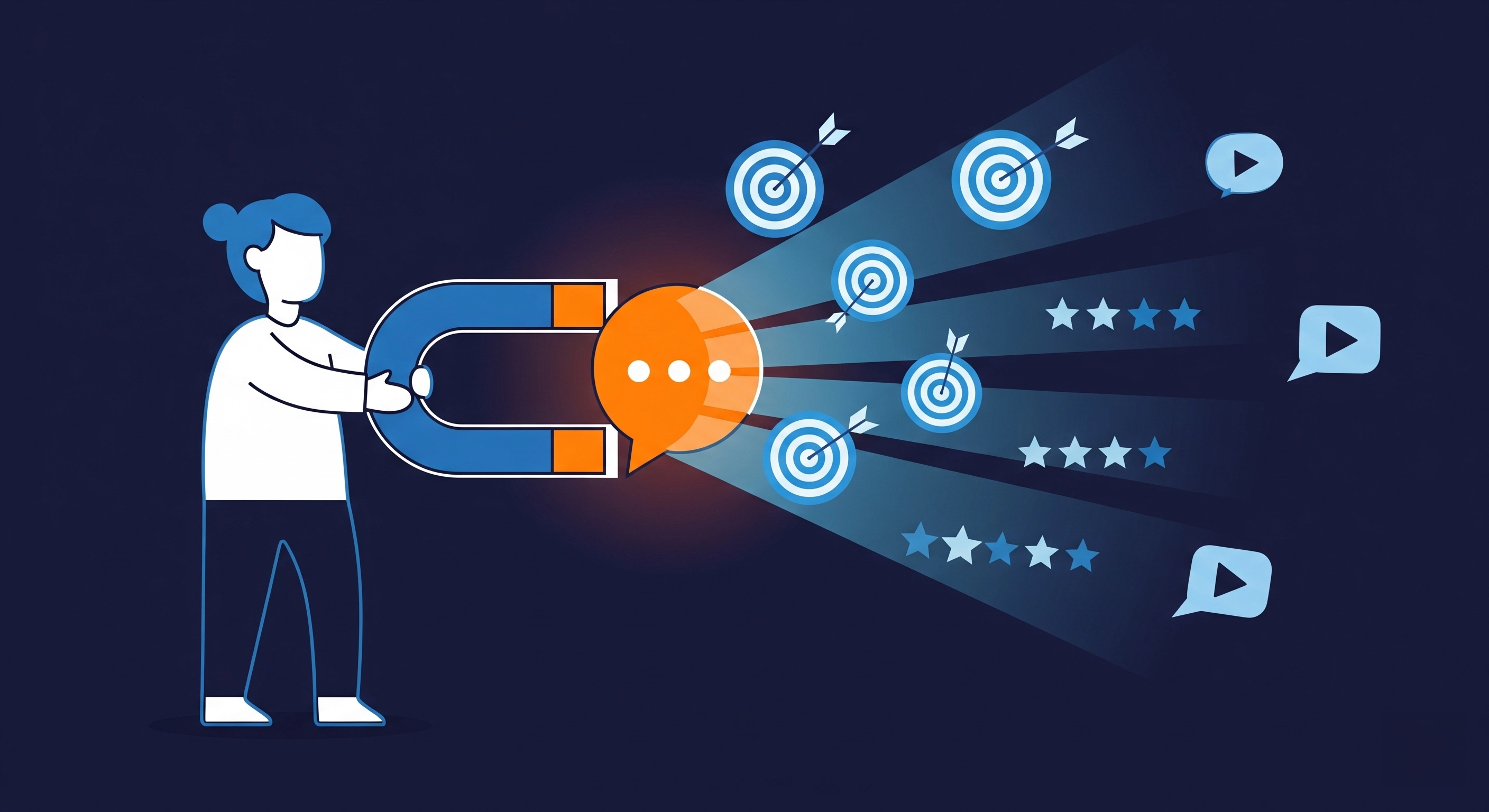
This is no longer a metaphor. It's literal. When you publish a 30-second video where a 45-year-old woman talks about her knee pain, the algorithm shows it to people with knee pain. Not because you targeted "knee pain", but because the creative's content tells Meta who it's going to resonate with.
The creative selects its own audience. If you understand that, it completely changes the way you work.
The best targeting that exists today is a creative that speaks directly to a specific person's problem.
The practical consequence: every time you make a generic ad that "speaks to everyone", you're speaking to no one. The algorithm doesn't know who to show it to. CTR drops, CPM goes up, and you think the problem is the budget.
So where does the winning creative come from?
This is where most people get it wrong. They look for creativity. They hire expensive designers, video production companies, art directors. And the ad is still bad.
The winning creative doesn't come from imagination. It comes from data on what the customer is already saying.
The places you need to look:
- Amazon or Mercado Libre reviews of products similar to yours — what buyers say about what convinced them and what frustrated them
- Comments on your own ads — the objections that show up there are the script for your next creative
- Customer support emails — what they ask before buying, what holds them back
- Testimonials from current customers — recorded on video with their own phone, no production, in their exact words
- Forums and Facebook groups in the niche — the way they talk about the problem is the way you need to talk
When you find the exact phrase a person uses to describe their problem and put it in the first frame of your video, the algorithm finds them. And converts them.
The structure that works in 2026
There's no universal format, but there's a structure that stands the test of time because it's based on how human attention works:
Hook (0–3 seconds): A specific problem, said in the customer's words. Not your slogan, not your brand. The pain.
Agitation (3–15 seconds): Amplify the problem. Make it concrete. Name the consequences of not solving it.
Solution (15–25 seconds): Your product or service as the logical path. Not the most creative one, the most obvious.
Proof (25–35 seconds): Evidence. A real result, a testimonial, a concrete number. No promises.
CTA (final seconds): A single action. No friction.
Simple. I know. And it works precisely because of that.
Why 90% of creatives don't convert
Because they're designed to be liked, not to sell. A creative that wins an advertising award and a creative that converts are generally two different things.
The one that wins awards impresses colleagues. The one that converts talks directly to the customer about their problem, with no frills, with evidence.
If you can watch your ad and it isn't clear in the first 3 seconds who it's for and what problem it solves, it's a bad creative. It doesn't matter how pretty it looks.
This mainly applies to eCommerce and B2C services with short buying cycles. B2B businesses or those with long sales cycles have different dynamics, although the principle of listening to the customer is universal.
Let's talk about how to apply this to your business.